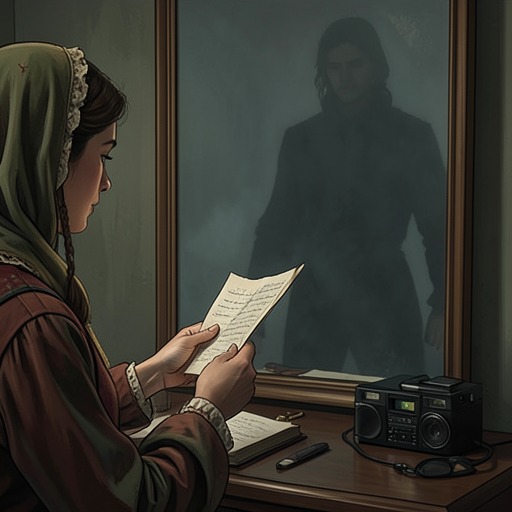
Tess resists Angel's marriage proposals
Tess of the d'UrbervillesTess resists Angel’s marriage proposals because she loves him yet believes that accepting him without revealing her past would be wrong. At Talbothays, her repeated refusals are not a lack of affection: she wants his love and permits him to express it, but regards marriage as a promise she cannot honestly make while withholding what she believes he ought to know. The episode’s central tension lies in the difference between her moral caution and Angel’s tendency to mistake it for ordinary hesitation.
The First Proposal
Angel frames his first proposal in practical terms. Since he expects to marry and plans to become a farmer, he says that he will need a wife who understands farm management, and asks Tess whether she will be that woman. The practical framing does not soften the emotional force of the question for Tess. She had accepted that her closeness to him had led her to love him, but had not anticipated marriage as its immediate consequence.
Tess answers that she cannot be his wife. Angel is astonished and asks whether she loves him; she answers that she would rather be his than anyone else’s, while maintaining that she cannot marry him. When he wonders whether she is already engaged to someone else, she denies it. Her refusal is therefore not a choice between Angel and another suitor: it comes from a withheld reason that she cannot yet bring herself to explain.
Love, Unworthiness, and Silence
Angel does not at first understand the meaning of Tess’s answer. His experience leads him to suppose that a woman’s negative response may be only a prelude to agreement, and he interprets the affection she has already shown him as encouragement. The narrator distinguishes Tess’s serious refusal from coyness, exposing the misreading that keeps their courtship unsettled. What Angel takes as reassuring signs are, for Tess, compatible with loving him while still refusing marriage.
When Angel asks again why she said no, Tess says that she is not good enough or worthy enough. Asked whether she means that she is not a fine lady, she answers that his friends would scorn her. This explanation gestures toward the social shame she anticipates, but she still does not disclose the experiences behind it. Her silence leaves Angel with an incomplete account of her resistance and leaves Tess carrying the burden of deciding whether disclosure is necessary before she can accept him.
The distinction she draws is precise: she likes Angel to tell her that he loves her, and says that his doing so will not offend her, but accepting him as a husband is different. She insists that refusing is for his good, not because she wants to repel him. In her view, giving herself the happiness of promising to be his would be wrong; Angel, who believes marriage would make her happy, cannot yet see why she regards that happiness as a danger to him.
The Promise to Tell
As the strain of withholding her explanation grows, Tess promises to tell Angel her experiences and everything about herself. She asks first to be allowed to leave, then agrees that she will give him her reasons on Sunday. The promise marks a movement toward disclosure, but it does not itself resolve the conflict: Tess has committed to speaking, not to accepting the proposal.
Afterward she withdraws to a thicket of pollard willows, where she can be unseen. The narrative presents her as divided between the desire to accept Angel without telling him and the scruple that such concealment would be wrong. She imagines that they might marry and risk discovery later, but recognizes that this course would run against the severe self-discipline she has maintained. Her love pulls toward acceptance; her sense of obligation holds her back.
Renewed Refusal and Its Cost
At a later meeting beside the Var, Angel again announces his hope that Tess will soon be his wife. Tess answers no, repeating that she refuses for his sake. Angel refrains from kissing her when she does not consent, and releases her rather than pressing the moment. The restraint matters: the narration identifies his departure after her repeated refusal as the point at which her resolve is sustained. Tess had nearly been persuaded to yield, and the story she has heard from the dairyman had helped strengthen her answer; without Angel’s decision to stop, the refusal might have given way.
They continue to meet over the following weeks, though less often than before. Angel changes his approach, supposing that Tess’s evasiveness and youth explain her refusals, and tries to coax her with words without resuming physical advances. The episode thus leaves the lovers in an unresolved pattern: Tess has declared both her love and her refusal, promised to explain herself, and continued to fear the consequences of disclosure, while Angel persists because he does not fully understand the reason she believes marriage would be wrong.